

Barnet Trade Unions write to the Heads of all Barnet Schools about reopening safely.

The following email was sent to the Head of every Barnet School.
“Dear Head,
I hope that you are well and managing to cope under these extraordinary circumstances we all find ourselves in.
We, the Trade Union Leads, are writing to all Heads in response to the ongoing speculation as to when schools may be asked to open up again especially as a vaccine or cure is not likely to available in this calendar year and, therefore, it is likely that we will need to continue social distancing.
Our concerns are both for the children and the staff.
We want to ensure the schools are as safe as possible in terms of dealing with COVID 19.
Our members are very worried about schools re-opening before it is safe. They have noted that the provision of PPE for NHS workers and Care workers has been a worrying and ongoing issue, being played out on national media on a daily basis. Whilst assurances have been made that supplies of PPE for the staff will be delivered day after day by senior members of the Government it is clear for all to see that this has not happened and it continues to be a serious issue for staff. Furthermore our members have watched with horror when news broke last week that PPE supplies were running out and that sadly Public Health England were revising their guidance down in response to supply rather than the level of risk to the workforce and patients.
It is with this back drop that we want to ensure that when schools open, the school is able to assure staff and parents that the workplace will be a safe place for all.
To this end we are asking all schools what measures they currently have in place in terms of the following:
- Risk Assessment while open with just for keyworkers’ and vulnerable children
- Risk Assessment when the school is re-opened
- The daily cleaning regime.
- PPE provision
- Training in the use and disposal of PPE.
Please feel free to contact me if you have any queries or believe we may be able to support your school and staff during this national emergency.
Stay Safe
Regards
Barnet Trade Unions”
Barnet UNISON statement:
If you have any questions or concerns email the branch at
contactus@barnetunison.org.uk
You can keep up to date with Barnet UNISON here on our
Website here https://www.barnetunison.me.uk/wp/
Facebook https://www.facebook.com/BarnetUNISON/
Twitter https://twitter.com/barnet_unison
Care Workers vs COVID-19 petition
 Dear UNISON members, your family and friends
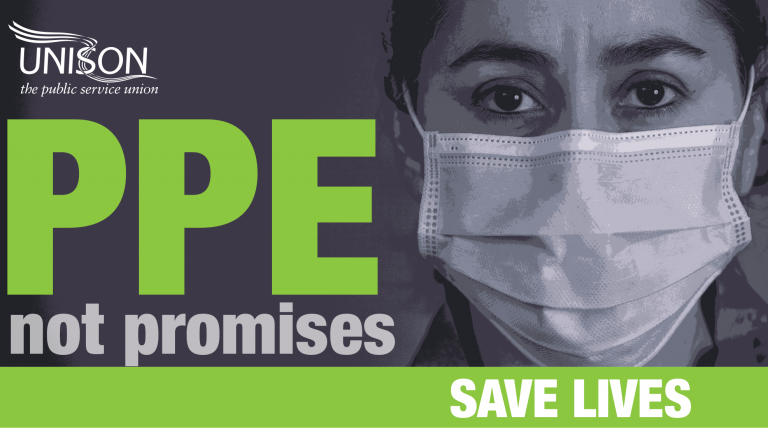
Below is a UNISON Care Workers petition with four simple demands I hope you can support and share widely.
1. Protect Our Health – Priority testing for care workers to limit the spread of disease to vulnerable patients and service users. Guarantee all essential training and personal protection equipment (PPE) to all frontline workers (e.g. goggles, masks, hand sanitisers, thermometers) in line with Public Health England guidance.
2. Protect Our Pay – Full normal pay for all those required by government guidance to self-isolate or who become ill because of COVID-19, in order to prevent unnecessary spread of infection. This includes all staff on zero-hour contracts, bank/relief contracts or multiple contracts.
3. Protect Our Employment – Ensure no-one is dismissed or laid-off for staying at home to care for themselves or their family. Absence due to COVID-19 should be excluded from absence management triggers.
4. Protect Our Families – Carers leave on full-pay for workers caring for a dependent who has COVID-19 or for whom childcare is unavailable.
Click on this UNISON link to add your name to the petition
https://action.unison.org.uk/page/58242/petition/1
Best wishes
John Burgess, Branch Secretary, Barnet UNISON.
Your Rights at Work: Forced to take annual leave during the lockdown?

An emerging issue being raised by some of our members across a number of employers is the issue of forced annual leave.
It has come to our attention that staff are being asked to take annual leave during the current lockdown.
Workers have a statutory right to take annual Leave.
For many workers during the current national crisis their home has become their workplace.
It is important for the mental health and well being of all workers that they have time away from their workplace.
During the lockdown workers are unable to go away on holidays
Barnet UNISON position is that unless a worker requests to take annual leave during the lock down the employer should not be using this crisis to force workers to take annual leave.
What does the Government say?
“Workers who have not taken all of their statutory annual leave entitlement due to COVID-19 will now be able to carry it over into the next 2 leave years.”
“There is also an obligation on employers to ensure their workers take their statutory entitlement in any one year – failure to do so could result in a financial penalty.
The regulations will allow up to 4 weeks of unused leave to be carried into the next 2 leave years, easing the requirements on business to ensure that workers take statutory amount of annual leave in any one year.
This will mean staff can continue working in the national effort against the coronavirus without losing out on annual leave entitlement.
The changes will also ensure all employers affected by COVID-19 have the flexibility to allow workers to carry over leave at a time when granting annual leave could leave them short-staffed in some of Britain’s key industries, such as food and healthcare.”
Read more here
https://www.gov.uk/government/news/rules-on-carrying-over-annual-leave-to-be-relaxed-to-support-key-industries-during-covid-19
Barnet UNISON advice
If you are having any annual leave issues with your employer please contact the union at contactus@barnetunison.org.uk or you can leave a message speaking slowly and clearly please include your name and telephone number on 020 8359 2088. We will respond as soon as we can.
Barnet UNISON COVID19 Update: Support for your Mental Health
 Dear Barnet UNISON members,
The lockdown is clearly having an impact on our mental health and wellbeing.
Below is a service called Able Futures who provide some excellent services for staff, some of our Barnet UNISON members are already using and providing some positive feedback.
Able Futures delivers the Access to Work Mental Health Support Service which can give nine months support from a mental health professional at no cost.
If staff are experiencing issues such as anxiety, depression, grief or stress, or are struggling to deal with problems such as debt, disrupted sleep or relationship breakdowns that may be affecting mental health, Able Futures can help you build resilience, tackle issues, feel better and learn new ways to manage your mental health throughout the ups and downs of life.
There’s no waiting list and you can apply online or by calling 0800 321 3137.
Below are some Able Futures resources and information from other agencies.
https://able-futures.co.uk/covid-19-coronavirus/coronavirus-and-anxiety/
Able Futures continue to offer a service, adapted to offer all telephone and online support now to avoid contact.
If you are furloughed, you are still entitled to support, as well as any family members that may be eligible.
Signing up is just a few clicks and only takes a few minutes via the Able Futures website:
https://able-futures.co.uk/covid-19-coronavirus/
You may also find excellent resources and advice on the following websites:
Young Minds for the younger people in our communities:
https://youngminds.org.uk/find-help/looking-after-yourself/coronavirus-and-mental-health/
This organisation can offer training and awareness:
https://actiontopreventsuicide.org/
Mental Health Foundation, some excellent information:
https://mentalhealth.org.uk/coronavirus
Do you want to join the COVID-19 council staff deployment programme?

Barnet Council are looking for staff to volunteer at this time of national emergency.
There are a number of roles they are looking for staff to help such as:
Working in the Food Bank which based in the RAF museum.
If you take a role as a volunteer it is on a voluntary basis it will not mean you experiencing a financial detriment or changes to your terms and conditions.
To find out more about the COVID-19 council staff deployment programme
click on the link below
https://www.barnet.gov.uk/internal/covid-19-news-staff
Scroll down to the bottom of the page to find the COVID19 Redeployment form
Government latest offer on Pay for Council workers

“With effect from 1 April 2020, an increase of 2.75 per cent on all NJC pay points 1 and above”
UNISON claim was 10%
Full details of the offer click on link below
http://msgfocus.com/files/amf_unison/project_131/Emps_to_TUs_Pay_Offer_2_16Apr20.pdf
UNISON calls for government to prioritise staff safety before re-opening schools

“Schools across the country are mostly closed, with pupils staying at home with families and carers. However, some schools remain partially open for children who have a social worker and are under safeguarding precautions, as well as children of key workers.
UNISON has, with other unions, issued a joint statement to the government warning against fully re-opening schools until staff safety is scientifically assured.
UNISON members have been essential in keeping schools open during the COVID-19 crisis, and are already concerned that, even with the small number of pupils currently in schools, it is impossible to maintain social distancing at all times.
UNISON National Secretary Jon Richards said: “We all know that schools will re-open at some stage, but that needs to be managed sensibly and not put people’s lives at risk.
“The government needs to be open with their plans and engage with UNISON and other unions early on to ensure that this isn’t mishandled.”
The statement co-signed by UNISON, Unite and GMB reads: “We call on the government to provide immediate reassurance to staff that any strategy for re-opening schools is discussed with relevant unions and other bodies at an early stage.
“Any proposals must be shared well in advance of any implementation, and re-opening schools should only happen once there is clear published scientific evidence that can command the confidence of the schools’ workforce that it is safe to do so.
“Suggestions in the media that the government in England is considering reopening schools has caused huge anxiety amongst school staff and parents”
The statement also includes demands for sufficient PPE, cleaning supplies and regular testing.”
Read full statement click on link below
2020.04.16UNISON Joint-union-statement-on-re-opening-of-schools
Barnet UNISON COVID Update: PPE for care workers.

Recommended PPE for primary, outpatient, community and social care by setting, NHS and independent sector
Date: 14 April 2020.
The PPE guidance takes you to a table showing the types of PPE you need depending on your workplace.
For staff working in care homes you need to read to look at the fourth column down on the left entitled:
“Community and social care, care home, mental health inpatients and other overnight care facilities e.g. learning disability, hospices, prison healthcare.”
If you look at the guidance it states:
- Disposable gloves : Single use
- Disposable plastic apron: Single use.
- Fluid-resistant (Type IIR) surgical mask: Sessional use.
- Eye/face protection: Risk assess sessional use.
What do they mean by eye/face protection?
- This may be single or reusable face/eye protection/full face visor or goggles
What do they mean by Single Use?
“4.Single use refers to disposal of PPE or decontamination of reusable items e.g. eye protection or respirator, after each patient and/or following completion of a procedure, task, or session; dispose or decontaminate reusable items after each patient contact as per Standard Infection Control Precautions (SICPs).”
What do they mean by Sessional use?
“5.A single session refers to a period of time where a health care worker is undertaking duties in a specific care setting/exposure environment e.g. on a ward round; providing ongoing care for inpatients. A session ends when the health care worker leaves the care setting/exposure environment. Sessional use should always be risk assessed and considered where there are high rates of hospital cases. PPE should be disposed of after each session or earlier if damaged, soiled, or uncomfortable.”
What do they mean by risk assess?
“8. Risk assessed use refers to utilising PPE when there is an anticipated/likely risk of contamination with splashes, droplets or blood or body fluids.”
For more details click on link to Government web site below
COVID-19 Update: Personal Protective Equipment (PPE) Training.
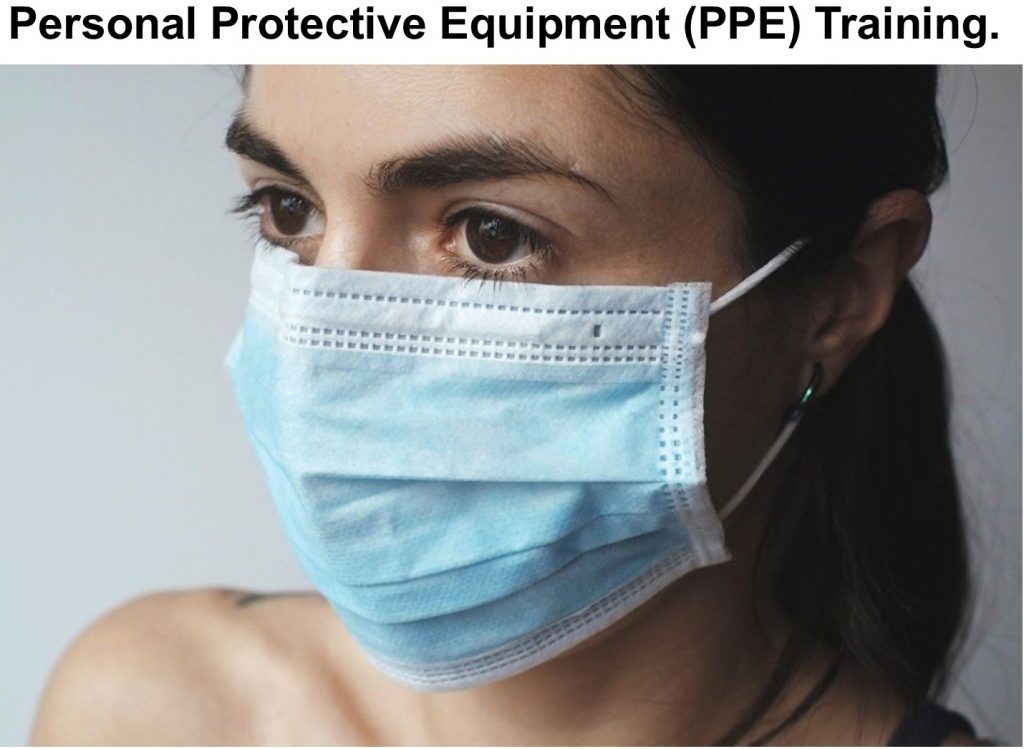 It is really important that all staff have training as to how to put on PPE and to take it off.
This is a training video produced by Public Health England as to how to put on and take off your PPE. It is less than 7 minutes long. Watching it and following the guidance will keep you and the people you are caring for safe.
Please watch COVID-19: Donning and doffing of Personal Protective Equipment in Health and Social Care Settings
If you have not had training please speak to your manager. If you do not get training please contact Barnet UNISON 0208 359 2088 or email us at contactus@barnetunison.org.uk
What happens if I take a break e.g. to have a drink of tea or water or go to the toilet?
You need to remove and dispose of your PPE safely, including the face mask. When you start work again you need to put on your fresh PPE for when you are carrying out personal care. You must not continue to use the same mask, apron or gloves.